Wednesday, April 27, 2011
Senators Franken and Blumenthal and Representative Johnson Announce Legislation Giving Consumers More Power In Courts vs. Corporations
Congressman Johnson's office sent me the following announcement in response to the Supreme Court's ruling that limits the ability of consumers to bring class action suits in many situations, where consumer service contracts provide binding arbitration provisions.
April 27, 2011
Sens. Franken, Blumenthal, Rep. Hank Johnson announce legislation giving consumers more power in courts vs. corporations
WASHINGTON, D.C. — After consumers were dealt a blow today when the Supreme Court ruled that companies can ban class action suits in contracts, U.S. Sens. Al Franken (D-Minn.) and Richard Blumenthal (D-Conn.) and Rep. Hank Johnson (D-Ga.) said today they plan to introduce legislation next week that would restore consumers’ rights to seek justice in the courts.
Their bill, called the Arbitration Fairness Act, would eliminate forced arbitration clauses in employment, consumer, and civil rights cases, and would allow consumers and workers to choose arbitration after a dispute occurred.
Many businesses rely on mandatory and binding pre-dispute arbitration agreements that force consumers and employees to settle any dispute with a company providing products or services without the benefit of legal recourse.
“This ruling is another example of the Supreme Court favoring corporations over consumers,” said Sen. Franken. “The Arbitration Fairness Act would help rectify the Court’s most recent wrong by restoring consumer rights. Consumers play an important role in holding corporations accountable, and this legislation will ensure that consumers in Minnesota and nationwide can continue to play this crucial role.”
“Powerful companies who take advantage of ordinary consumers must be held accountable,” said Sen. Blumenthal. “Today’s misguided Supreme Court ruling is a setback for millions of Americans, denying injured consumers access to justice. The Arbitration Fairness Act would reverse this decision and restore the long-held rights of consumers to hold corporations accountable for their misdeeds.”
“Forced arbitration agreements undermine our indelible Constitutional right to trial by jury, benefiting powerful businesses at the expense of American consumers and workers,” said Rep. Johnson. “Americans with few choices in the marketplace may unknowingly cede their rights when they enter contracts to buy a home or a cell phone, place a loved one in a nursing home, or start a new job. We must fight to defend our rights and re-empower consumers.”
In Concepcion v. AT&T, consumers brought a claim against AT&T for false advertising. However, because the value of their case was only $30, their case was consolidated into a class action. AT&T sought to block the lawsuit by pointing to the mandatory arbitration clause in the service contract but lower courts applying state law rightly invalidated the arbitration clause because it banned class actions entirely.
In today’s 5-4 decision, the Supreme Court overturned these lower court decisions which sought to protect consumers. The majority of the Court held that the Federal Arbitration Act barred state courts from protecting consumers from these arbitration clauses. The effect of this decision essentially insulates companies from liability when they defraud a large number of customers of a relatively small amount of money.
A longtime advocate for consumers and workers in cases of forced arbitration, in 2009 Sen. Franken passed legislation with bipartisan support that restricts funding to defense contractors who commit employees to mandatory binding arbitration in the case of sexual assault and other civil rights violations. Congressman Johnson, a longtime champion of workers and consumer rights, first introduced the Arbitration Fairness Act in 2007.


1,900 Year Old Wisdom: "An Imbalance Between Rich and Poor Is the Oldest and Most Fatal Ailment of all Republics"
I noted in February that John Kenneth Galbraith and Marriner Eccles explained 50 years ago that inequality causes crashes, and that many modern economists agree.
I just found a slighter older statement saying the same thing.
Specifically, the well-known Greek historian Plutarch - who died in 120 A.D. - said:
An imbalance between rich and poor is the oldest and most fatal ailment of all republics.Given that the level of inequality in America today is one of the greatest in history, it is not surprising that the republic is ailing so badly. See this, this, this, this and this.
As I noted in 2008:
This is not a question of big government versus small government, or republican versus democrat. It is not even a question of Keynes versus Friedman (two influential, competing economic thinkers).
It is a question of focusing any government funding which is made to the majority of poker players - instead of the titans of finance - so that the game can continue. If the hundreds of billions or trillions spent on bailouts had instead been given to ease the burden of consumers, we would have already recovered from the financial crisis.
Tuesday, April 26, 2011
Four Stories This Week Prove that the War On Terror Is a Farce
Executive Summary: Two members of the Joint Chiefs of Staff 'dis America's hyper-aggressive imperialism ... Newly-leaked documents show that innocent people were thrown into Gitmo because they wore Casio watches or were Al Jazeera reporters … Al Qaeda assassin worked for MI6 … And – yes – the Iraq war was for oil.
Four stories from the last week confirm what many have been saying for years: the war on terror is a farce.
Military Brass Say Imperial Wars of Aggression are Hurting America
I've said for years that the war on terror is weakening America.
I've pointed out that experts say that the Iraq war has increased the threat of terrorism. See this, this, this, this, this, this, this and this.
As I noted last year:
The very hawkish and pro-war Rand Corporation - released a study in 2008 called "How Terrorist Groups End: Lessons for Countering al Qa'ida".
The report confirms that the war on terror is actually weakening national security. As a press release about the study states:
"Terrorists should be perceived and described as criminals, not holy warriors, and our analysis suggests that there is no battlefield solution to terrorism."Former U.S. National Security Adviser Zbigniew Brzezinski told the Senate that the war on terror is "a mythical historical narrative". And Newsweek has now admitted that the war on terror is wholly unnecessary.
***
As American reporter Gareth Porter writes in Asia Times:Three weeks after the September 11, 2001, terror attacks, former US defense secretary Donald Rumsfeld established an official military objective of not only removing the Saddam Hussein regime by force but overturning the regime in Iran, as well as in Syria and four other countries in the Middle East, according to a document quoted extensively in then-under secretary of defense for policy Douglas Feith's recently published account of the Iraq war decisions. Feith's account further indicates that this aggressive aim of remaking the map of the Middle East by military force and the threat of force was supported explicitly by the country's top military leaders.Feith's book, War and Decision, released last month, provides excerpts of the paper Rumsfeld sent to President George W Bush on September 30, 2001, calling for the administration to focus not on taking down Osama bin Laden's al-Qaeda network but on the aim of establishing "new regimes" in a series of states...***General Wesley Clark, who commanded the North Atlantic Treaty Organization bombing campaign in the Kosovo war, recalls in his 2003 book Winning Modern Wars being told by a friend in the Pentagon in November 2001 that the list of states that Rumsfeld and deputy secretary of defense Paul Wolfowitz wanted to take down included Iraq, Iran, Syria, Libya [yes, Libya], Sudan and Somalia [and Lebanon].***When this writer asked Feith . . . which of the six regimes on the Clark list were included in the Rumsfeld paper, he replied, "All of them."***The Defense Department guidance document made it clear that US military aims in regard to those states would go well beyond any ties to terrorism. The document said the Defense Department would also seek to isolate and weaken those states and to "disrupt, damage or destroy" their military capacities - not necessarily limited to weapons of mass destruction (WMD)...Rumsfeld's paper was given to the White House only two weeks after Bush had approved a US military operation in Afghanistan directed against bin Laden and the Taliban regime. Despite that decision, Rumsfeld's proposal called explicitly for postponing indefinitely US airstrikes and the use of ground forces in support of the anti-Taliban Northern Alliance in order to try to catch bin Laden.Instead, the Rumsfeld paper argued that the US should target states that had supported anti-Israel forces such as Hezbollah and Hamas.***A senior officer on the Joint Staff told State Department counter-terrorism director Sheehan he had heard terrorist strikes characterized more than once by colleagues as a "small price to pay for being a superpower".
And our top military and intelligence leaders - as well as Nobel prize winning economists - say that war is destroying our economy. The amount we're spending is insane. For example, I've previously noted that the rational for a large-scale war in Afghanistan doesn't make sense:
The U.S. admits there are only a small handful of Al Qaeda in Afghanistan. As ABC notes:
U.S. intelligence officials have concluded there are only about 100 al Qaeda fighters in the entire country.
With 100,000 troops in Afghanistan at an estimated yearly cost of $30 billion, it means that for every one al Qaeda fighter, the U.S. will commit 1,000 troops and $300 million a year...
This week, two senior members of the U.S. joint chiefs of staff - Captain Wayne Porter of the U.S. Navy and Colonel Mark Mykleby of the Marine Corps - agreed that America is on the wrong track. As Fareed Zakaria summarized their report yesterday:
That the United States has embraced an entirely wrong set of priorities, particularly with regard to its federal budget. We have overreacted to Islamic extremism. We have pursued military solutions instead of political ones.
***Iraq: A War for ... Oil?
We are underinvesting in the real sources of national power - our youth, our infrastructure and our economy. The United States sees the world through the lens of threats, while failing to understand that influence, competitiveness and innovation are the key to advancing American interests in the modern world... Above all we must invest in our children. Only by educating them properly will we ensure our ability to compete in the future.
***
It's likely that the essay had some official sanction, which means that the Chairman of the Joint Chiefs of Staff or perhaps even Secretary of Defense Robert Gates had seen it and did not stop its publication.
***Washington needs to make sure that the United States does not fall into the imperial trap of every other superpower in history, spending greater and greater time and money and energy stabilizing disorderly parts of the world on the periphery, while at the core its own industrial and economic might is waning.
We have to recognize that fixing America's fiscal problems - paring back the budget busters like entitlements and also defense spending - making the economy competitive, dealing with immigration and outlining a serious plan for energy use are the best strategies to stay a superpower, not going around killing a few tribal leaders in the remote valleys and hills of Afghanistan.
As I've repeatedly noted, Alan Greenspan, John McCain, George W. Bush, Sarah Palin, a high-level National Security Council officer and others all say that the Iraq war was really about oil.
Former CIA director George Tenet said that the White House wanted to invade Iraq long before 9/11, and inserted "crap" in its justifications for invading Iraq. Former Treasury Secretary Paul O'Neill also says that Bush planned the Iraq war before 9/11. (The government apparently planned the Afghanistan war before 9/11 as well. See this and this).
The Independent confirmed last week:
Plans to exploit Iraq's oil reserves were discussed by government ministers and the world's largest oil companies the year before Britain took a leading role in invading Iraq, government documents show.The Independent also notes that one of the main movers and shakers for the Iraq oil shenanigans has been mucking around in Libya as well:
***The minutes of a series of meetings between ministers and senior oil executives are at odds with the public denials of self-interest from oil companies and Western governments at the time.
***
Minutes of a meeting with BP, Shell and BG (formerly British Gas) on 31 October 2002 read: "Baroness Symons agreed that it would be difficult to justify British companies losing out in Iraq in that way if the UK had itself been a conspicuous supporter of the US government throughout the crisis."
The minister then promised to "report back to the companies before Christmas" on her lobbying efforts.
The Foreign Office invited BP in on 6 November 2002 to talk about opportunities in Iraq "post regime change". Its minutes state: "Iraq is the big oil prospect. BP is desperate to get in there and anxious that political deals should not deny them the opportunity."
After another meeting, this one in October 2002, the Foreign Office's Middle East director at the time, Edward Chaplin, noted: "Shell and BP could not afford not to have a stake in [Iraq] for the sake of their long-term future... We were determined to get a fair slice of the action for UK companies in a post-Saddam Iraq."
Whereas BP was insisting in public that it had "no strategic interest" in Iraq, in private it told the Foreign Office that Iraq was "more important than anything we've seen for a long time".
BP was concerned that if Washington allowed TotalFinaElf's existing contact with Saddam Hussein to stand after the invasion it would make the French conglomerate the world's leading oil company. BP told the Government it was willing to take "big risks" to get a share of the Iraqi reserves, the second largest in the world.
Over 1,000 documents were obtained under Freedom of Information over five years by the oil campaigner Greg Muttitt. They reveal that at least five meetings were held between civil servants, ministers and BP and Shell in late 2002.
The 20-year contracts signed in the wake of the invasion were the largest in the history of the oil industry. They covered half of Iraq's reserves – 60 billion barrels of oil ...
Lady Symons, 59, later took up an advisory post with a UK merchant bank that cashed in on post-war Iraq reconstruction contracts. Last month she severed links as an unpaid adviser to Libya's National Economic Development Board after Colonel Gaddafi started firing on protesters ...Imprisoning Innocents at Gitmo
As I noted in 2009:
One of the main excuses used to justify torture is that the people being tortured were bloodthirsty terrorists, who would do far worse to us if we didn't stop them.
Is that true?
Judge for yourself:
- The number two man at the State Department under Colin Powell, Colonel Lawrence Wilkerson, says that many of those being held at Guantanamo Bay were innocent, and that top Bush administration officials knew that they were innocent. Moreover, he said:
"This philosophy held that it did not matter if a detainee were innocent. Indeed, because he lived in Afghanistan and was captured on or near the battle area, he must know something of importance (this general philosophy, in an even cruder form, prevailed in Iraq as well, helping to produce the nightmare at Abu Ghraib). All that was necessary was to extract everything possible from him and others like him, assemble it all in a computer program, and then look for cross-connections and serendipitous incidentals--in short, to have sufficient information about a village, a region, or a group of individuals, that dots could be connected and terrorists or their plots could be identified.(see this and this). Indeed, Wilkerson signed a declaration under penalty of perjury stating that Bush, Cheney and Rumsfeld covered up the fact that hundreds of innocent men were sent to Guantanamo because they feared that releasing them would harm the push for the war in Iraq and the broader war on terror.Thus, as many people as possible had to be kept in detention for as long as possible to allow this philosophy of intelligence gathering to work. The detainees' innocence was inconsequential. After all, they were ignorant peasants for the most part and mostly Muslim to boot."
- Many others also state that those tortured were mainly innocent farmers, villagers, or those against whom neighbors held a grudge. Indeed, people received a nice cash reward from the U.S. government for turning people in as "suspected terrorists" (and see this movie)
- The commander of the Abu Ghraib prison in Iraq, Janis Karpinski, estimates that 90% of detainees in the prison were innocent
This has been confirmed by the recent release of U.S. military files. As the Guardian reported yesterday:
The US military dossiers, obtained by the New York Times and the Guardian, reveal how ... many prisoners were flown to the Guantánamo cages and held captive for years on the flimsiest grounds, or on the basis of lurid confessions extracted by maltreatment.
The files depict a system often focused less on containing dangerous terrorists or enemy fighters, than on extracting intelligence. Among inmates who proved harmless were an 89-year-old Afghan villager, suffering from senile dementia, and a 14-year-old boy who had been an innocent kidnap victim.
Anyone who was affiliated with Pakistan's national intelligence service, or that had been held as a prisoner in a Taliban jail, or that wore a certain type of watch, was considered a terrorist:
US authorities listed the main Pakistani intelligence service, the Inter-Services Intelligence Directorate (ISI), as a terrorist organisation alongside groups such as al-Qaida, Hamas, Hezbollah and Iranian intelligence.
Interrogators were told to regard links to any of these as an indication of terrorist or insurgent activity.
***
A number of British nationals and residents were held for years even though US authorities knew they were not Taliban or al-Qaida members. One Briton ... was rendered to Guantánamo simply because he had been held in a Taliban prison and was thought to have knowledge of their interrogation techniques.
***
Another 17-page file, titled "GTMO matrix of threat indicators for enemy combatants", advises interrogators to look out for signs of terrorist activity ranging from links to a number of mosques around the world, including two in London, to ownership of a particular model of Casio watch.
"The Casio was known to be given to the students at al-Qaida bombmaking training courses in Afghanistan," it states.
Others were held because they led religious services or drove cabs in certain geographic regions, or because they were Al Jazeera reporters:
One man was transferred to the facility "because he was a mullah, who led prayers at Manu mosque in Kandahar province, Afghanistan … which placed him in a position to have special knowledge of the Taliban".
***
Another prisoner was shipped to the base "because of his general knowledge of activities in the areas of Khowst and Kabul based as a result of his frequent travels through the region as a taxi driver".
The files also reveal that an al-Jazeera journalist was held at Guantánamo for six years, partly in order to be interrogated about the Arabic news network.
His dossier states that one of the reasons was "to provide information on … the al-Jazeera news network's training programme, telecommunications equipment, and newsgathering operations in Chechnya, Kosovo and Afghanistan, including the network's acquisition of a video of UBL [Osama bin Laden] and a subsequent interview with UBL".
Al Qaeda Assassin and ... Green Beret?
The Guardian points out today that U.S. military reports indicate that an Al Qaeda assassin worked for the Britain's MI6 intelligence agency.
You decide whether this connotes hanky panky or incompetence by Western intelligence services.
As I've previously noted, a former Pakistani president alleged that another prominent Al Qaeda terrorist also worked for MI6.
I've also noted:
- The FBI had penetrated the cell which carried out the 1993 world trade center bombing, but had -- at the last minute -- canceled the plan to have its FBI infiltrator substitute fake powder for real explosives, against the infiltrator's strong wishes (summary version is free; full version is pay-per-view)? See also this TV news report
- The Congressional Joint Inquiry into 9/11 discovered that an FBI informant had hosted and rented a room to two hijackers in 2000 and that, when the Inquiry sought to interview the informant, the FBI refused outright, and then hid him in an unknown location, and that a high-level FBI official stated these blocking maneuvers were undertaken under orders from the White House (confirmed here by the Co-Chair of the Joint Inquiry and former Head of the Senate Intelligence Committee, Bob Graham; and see this Newsweek article)
- One of al-Qaeda’s top trainers in terrorism and how to hijack airplanes, who was a very close associate of Bin Laden, was an American citizen who was an operative for the FBI, the CIA, and the Army, and a green beret (see this article from the San Francisco Chronicle and this article from the Globe and Mail). Indeed, while he was acting as an FBI informant, he smuggled Bin Laden in and out of Afghanistan, helped plan the attacks on US embassies in Africa, and apparently played a pivotal role in planning 9/11.
According to a 1995 Boston Globe report, his entry into the country was made possible by “clandestine CIA sponsorship.” According to West Point's Combatting Terrorism Center, the terrorist was:Given a visa waiver under a “little known visa waiver program that allows the CIA and other security agencies to bring valuable agents into the country, bypassing the usual immigration formalities.” While perhaps “little known,” this authority was granted to the Director of National Intelligence by the Central Intelligence Agency Act of 1949 and codified in 50 U.S.C. §403h, which states that if “the admission of a particular alien into the United States for permanent residence is in the interest of national security or essential to the furtherance of the national intelligence mission, such alien and his immediate family shall be admitted to the United States for permanent residence without regard to their inadmissibility under the immigration or any other laws and regulations….”
Even assuming that such shenanigans are due to sheer incompetence only reaffirms that the war on terror has been one of the biggest farces in history.
Could a Rogue Computer Virus be Used to Shut Down Nuclear Plants Worldwide?
It is now common knowledge that the U.S. and Israel developed the Stuxnet computer virus in order to slow down Iran's nuclear program.
As the New York Times noted in January:
And the Telegraph noted last month:Over the past two years, according to intelligence and military experts familiar with its operations, Dimona has taken on a new, equally secret role — as a critical testing ground in a joint American and Israeli effort to undermine Iran’s efforts to make a bomb of its own.
Behind Dimona’s barbed wire, the experts say, Israel has spun nuclear centrifuges virtually identical to Iran’s at Natanz, where Iranian scientists are struggling to enrich uranium. They say Dimona tested the effectiveness of the Stuxnet computer worm, a destructive program that appears to have wiped out roughly a fifth of Iran’s nuclear centrifuges and helped delay, though not destroy, Tehran’s ability to make its first nuclear arms.
“To check out the worm, you have to know the machines,” said an American expert on nuclear intelligence. “The reason the worm has been effective is that the Israelis tried it out.”
Though American and Israeli officials refuse to talk publicly about what goes on at Dimona, the operations there, as well as related efforts in the United States, are among the newest and strongest clues suggesting that the virus was designed as an American-Israeli project to sabotage the Iranian program.
***
Officially, neither American nor Israeli officials will even utter the name of the malicious computer program, much less describe any role in designing it.
But Israeli officials grin widely when asked about its effects. Mr. Obama’s chief strategist for combating weapons of mass destruction, Gary Samore, sidestepped a Stuxnet question at a recent conference about Iran, but added with a smile: “I’m glad to hear they are having troubles with their centrifuge machines, and the U.S. and its allies are doing everything we can to make it more complicated.”
***
By the accounts of a number of computer scientists, nuclear enrichment experts and former officials, the covert race to create Stuxnet was a joint project between the Americans and the Israelis, with some help, knowing or unknowing, from the Germans and the British.
Although Israel has not officially accepted responsibility for the Stuxnet attack, evidence of its role has been mounting since it was first discovered last July.A showreel played at a retirement party for the head of the Israeli Defence Forces has strengthened claims the country's security forces were responsible for a cyber attack on the Iranian nuclear programme.
The video of Lieutenant General Gabi Ashkenazi's operational successes included references to Stuxnet, a computer virus that disrupted the Natanz nuclear enrichment site last year, Ha'aretz reported.
***
Attributing the source of cyber attacks in notoriously difficult, but security researchers say factors including complexity of the operation, which would have required human sources inside the Iranian nuclear programme, point strongly to the Israeli security forces.
As PC World pointed out last November,
The sophisticated Stuxnet is a "game changer" for companies and governments looking to protect their networks, said Sean McGurk, acting director of the National Cybersecurity and Communications Integration Center in the U.S. Department of Homeland Security.
***
As of last week, there were still about 44,000 computers infected with Stuxnet worldwide, with about 60 percent of them in Iran, said Dean Turner, director of Symantec's Global Intelligence Network. About 1,600 of the current infections are in the U.S., he said.
***
"Stuxnet demonstrates that industrial control systems are more vulnerable to cyberattacks than in the past for several reasons, including their increased connectivity to other systems and the Internet," he said. "Further, as demonstrated by past attacks and incidents involving industrial control systems, the impact on a critical infrastructure could be substantial."
Indeed, one of the computer experts quoted by the New York Times, German cyber-security expert Ralph Langner, noted in a Ted talk last month that Stuxnet could be used to attack Western nuclear power plants and other types of automated plants:
[Langner] went on to describe the risk that Stuxnet could be used to blow up power plants:"The idea here is not only to fool the operators in the control room. It actually is much more dangerous and aggressive. The idea here is to circumvent a digital safety system.... when they are compromised, then real bad things can happen. Your plant can blow up and and neither your operators nor your safety system will notice it. That's scary. But it gets worse - and this is very important, what I am going to say. Think about this: this attack is generic. It doesn't have anything to do with specifics with centrifuges, with uranium enrichment. So it would work as well, for example in a power plant or in an automobile factory. It is generic. And as an attacker you don't have to deliver this payload by a USB stick, as we saw it in the case of Stuxnet. You could also use conventional worm technology for spreading. Just spread it as wide as possible. And if you do that, what you end up with is a cyberweapon of mass destruction.""That's the consequence that we have to face," he said, deliberately, while showing a map that marked Western countries (Israel not included) in green. "So unfortunately, the biggest number of targets for such attacks are not in the Middle East. They are in the United States, in Europe and in Japan. So all the green areas, these are your target-rich environments. We have to face the consquences and we better start to prepare right now."
***
It seems possible that he thinks Israel could use the worm against Western targets. Why the German consultant thinks Israel would want to do this, one can only speculate.

***Has Stuxnet Already Caused Damage Outside Of Iran?
In a correspondence with cyber-security firm Symantec some six months ago, Langner named a "hacker underground" as the possible threat:***"You fail to understand that the hacker underground has been studying control systems for years without any success. You fail to understand that this community will eagerly dismantle Stuxnet as a blueprint for how to cyber-attack installations from the cookie plant next door to power plants."
The New York Times recently reported that the Stuxnet virus could possibly still be infecting Iranian systems and that it may unleash additional havoc on new targets.
Since the Japanese earthquake, Michael Rivero has posted hundreds of articles arguing that the Stuxnet virus has "gotten loose" and attacked other nuclear power plants outside of Iran.
The former editor of the Japan Times - Yoichi Shimatsu - writes:
Tepco engineers suggested that the electric power inside the plant was knocked out by something other than the tsunami. I have pointed to this possibility early on, that the quake and control disruptions could have made the control computers vulnerable to the Stuxnet virus.
According to Yomiuri, Stuxnet was in Japan as of October of 2010. However, I find it hard to believe that it was not the massive earthquake and the enormous tsunami which knocked out the power (although I suppose a virus could have exacerbated the damage).
There have been a lot of strange stories about unexplained nuclear power plant shutdowns. For example, as Fox News reported last week:
A nuclear reactor at Plant Vogtle in eastern Georgia has been taken out of service until authorities determine why it unexpectedly shut down.
I have no idea whether or not the shutdowns were caused by Stuxnet accidentally spreading to other reactors, instead of just hitting its intended target: Iran.
But at the very least, the virus created by the U.S. and Israel to slow down Iran's nuclear program has opened a "Pandora's box" which leaves our nuclear plants and other sensitive facilities open to attacks by hostile governments or rogue hackers.
Update: See this must-read, and comical, development,
"Why Did the Fed Bail Out the Bank of Libya?" and Other Questions for Mr. Bernanke
Fed Chairman Ben Bernanke will give his first in a series of regular press conferences tomorrow. Journalists will be allowed to ask questions.
As Robert D. Auerbach - an economist with the U.S. House of Representatives Financial Services Committee for eleven years, assisting with oversight of the Federal Reserve, and subsequently Professor of Public Affairs at the Lyndon B. Johnson School of Public Affairs at the University of Texas at Austin - notes, the press conferences are simply a p.r. ploy, and "will not remedy the fed's corrupt and deceptive public records policies."
But some people have suggested some questions for Mr. Bernanke. For example, Senator Sanders asks:
Why Did the Fed Bail Out the Bank of Libya?A simple yet powerful question is:
Please list the banks and other entities and individuals which own the Federal Reserve, and their percentage of ownership.Another interesting question might be:
Mr. Bernanke, you have previously admitted that the Federal Reserve caused the Great Depression. Do you think the Fed caused the Great Recession, given that the Fed:
- Turned its cheek and allowed massive fraud
- Acted as cheerleader in chief for unregulated use of derivatives at least as far back as 1999 (see this and this)
- And for subprime loans
- Allowed the giant banks to grow into mega-banks, even though most independent economists and financial experts say that the economy will not recover until the giant banks are broken up. For example, Citigroup's former chief executive says that when Citigroup was formed in 1998 out of the merger of banking and insurance giants, Greenspan told him, “I have nothing against size. It doesn’t bother me at all”
- Argued that economists had conquered the business cycle, and that modern, technologically advanced financial markets are best left to police themselves
- Preached that a new bubble be blown every time the last one bursts
- Kept interest rates too low?
Here are some other good questions from Senator Sanders and Tyler Durden.
And in 2009, I wrote a long series of questions for Bernanke's Senate confirmation hearing. Unfortunately, nothing has changed, and so the questions are still relevant today.
Monday, April 25, 2011
Something Odd Is Happening at Reactor Number 4
NHK reports:
The operator of the troubled Fukushima Daiichi nuclear power plant is carefully monitoring the situation at the Number 4 spent fuel pool, where the water temperature is rising despite increased injections of cooling water.(Bear in mind that the amount of radioactive fuel at Fukushima dwarfs Chernobyl.)
Tokyo Electric Power Company, or TEPCO, says it will inject 210 tons of water into the pool on Monday, after finding on Sunday evening that the temperature in the pool had risen to 81 degrees Celsius.
***
On Friday, TEPCO found that the pool's temperature had reached 91 degrees, so it began injecting 2 to 3 times the amount of water.
***
The Number 4 spent fuel pool stores 1,535 fuel rods, the most at the nuclear complex.
As I noted on April 2nd:
Nuclear engineer Arnie Gundersen notes that the spent fuel rods in reactor number 4 have no water, and the rods are exposed:
In addition, the official Japanese atomic energy website shows 4,250 sieverts/hour of radiation inside the containment vessel at reactor 4 ("S/C" stands for suppression chamber):

These are very high levels of radiation. As I noted on April 10:
Radiation levels were apparently about 300 sieverts per hour ... right after Chernobyl exploded.
To be clear, the Chernobyl figure is radiation released into the environment, while the reactor 4 figure is radiation within the containment vessel. I have seen no evidence to date that reactor 4 is leaking.
This is especially odd given that reactor 4 was supposedly shut down prior to the earthquake for maintenance. In other words, reactor 4 was - according to official reports - shut down, and shouldn't have very much radiation at all. Something doesn't add up.
In contrast, the radiation inside the cores of the other reactors are much lower:
- Reactor 1: 0
- Reactor 2: 26.3
- Reactor 3: 11.1
- Reactor 5: 0
- Reactor 6: 0
Indeed, the Japanese nuclear agency prominently displays the radiation data for all of the reactors except number 4 on it's main page. Number 4 is conspicuously absent, and you have to type in the url for the correct web page to find it.
The building housing reactor 4 doesn't seem to be quite as badly damaged as those housing other reactors:
However, a Fukushima engineer says he helped cover up a cracked containment vessel at reactor number 4 for decades.
On the other hand, the fact that no radiation is being reported in the drywell of reactor 4 (noted by "D/W" in the nuclear agency's tables) - while there it is for several of the other reactors - might imply that the containment vessel has maintained its stability.
At this point, I don't have enough information to determine why the radiation levels inside reactor 4 are so high compared to the other reactors, let alone what it means. It might mean that reactor 4 is in trouble. On the other hand, it could mean that reactor number 4 is the only reactor which still has core integrity. In other words, maybe the other reactor cores have much lower radioactive levels because most of the radiation has already leaked out.
Sunday, April 24, 2011
Radiation Expert: "Sr-90 and Uranium and Particulates Will Be Building Up in the USA and Europe ... For Now I Think It Prudent To Stop Drinking Milk"
Preface: I take very seriously any warning about consuming a product which is important for the local economy. But when a respected radiation expert issues this type of warning, I have to pass it on.
I wrote to radiation expert Dr. Chris Busby to ask him if he thought people living outside of Japan should take any actions to try to reduce their radiation exposure:
Epidemiologist Dr. Wing thinks people outside of Japan shouldn't do anything to attempt to reduce radiation exposure: Leading Epidemiologist: Instead of Trying to Avoid Japanese Radiation, Put Your Energy Into Demanding a Saner Energy Policy
But the French anti-nuclear NGO CRIIAD says that pregnant women and infants should take steps to reduce exposure: French Nuclear Group Warns that Children and Pregnant Mothers Should Protect Themselves from Radiation
I've also researched the scientific literature, and found that antioxidants can help a little: Can Vitamins or Herbs Help Protect Us from Radiation?
What's your advice for people outside of Japan?
Professor Busby replied:
I attach my "don't panic" paper. However, since then I have re-thought this advice as the thing is still fissioning and releasing 10 to the fourteen becquerels a day. This will mean that Sr-90 [strontium 90] and Uranium and particulates will be building up in the USA and Europe. I will assess this later but for now I think it prudent to stop drinking milk. I also attach the particulates note.
Busby - Fukuparticles2
Busby - Dont Panic
Disclaimer: I am not a health professional or radiation expert.
Friday, April 22, 2011
We Could Make Our Roads Into Solar and Piezo-Electric Generators
I wrote yesterday:
Another use of a free, wasted byproduct to generate electricity is piezo-electric energy. "Piezo" means pressure. Anything that produces pressure can produce energy.A couple of readers thought that sounded nuts.For example, a train station in Japan installed piezo-electric equipment in the ground, so that the foot traffic of those walking through the train station generates electricity (turnstiles at train, subway and ferry stations, ballparks and amusement parks can also generate electricity).
Similarly, all exercise machines at the gym or at home can be hooked up to produce electricity.
But perhaps the greatest untapped sources of piezo-electric energy are freeways and busy roads. If piezo-electric mats were installed under the busiest sections [a little ways under the surface], the thousands of tons of vehicles passing over each day would generate massive amounts of electricity for the city's use.
But as TreeHugger notes today:
Now why not put a piezo-electric mat under the crystalline silicon solar cells, under the layer of toughened glass?
Copyright TNO 2011The Dutch are well known for their ubiquitous bike lanes, to the point where Amsterdam is neck and neck with Copenhagen for the title of most bike-loving capital in Europe. Now, Denmark will have to come up with something big to match the latest plan from the Netherlands - the installation of solar panels in roads, starting with bike lanes.
Talk about the efficient use of space: if you're going to have roads (and hopefully you'll have bike lanes), why not put that space to work producing energy? Called the Solaroad, the project is the brainchild of Dutch research firm TNO. The idea is pretty straightforward: a layer of concrete forms the road itself. A centimeter thick layer of crystalline silicon solar cells is laid on top, and covered by a layer of toughened glass. The energy potential: 50kWh per square meter per year, which can then be used to power street lighting, traffic systems and households.
But it's still an idea in development, which is why TNO, working with the Province of North Holland, the consulting firm Ooms Averhorn Group and the tech firm Intech, is starting with a small-scale pilot program in the town of Krommenie, outside of Amsterdam. Scheduled for installation next year, the first Solaroad will hopefully allow its developers better implement many more throughout the country.

We'd get two different forms of energy generation at once...
Jobs Bill? The Government Passed a Jobs Bill Years Ago ... Just Not for US
A lot of proud American citizens the serfs have complained that the government hasn't passed a meaningful jobs bill.
Sure, unemployment is brutal for most Americans ... and the government is doing everything wrong in terms of reducing unemployment.
But that's a small price to pay ... corporate profits are soaring thanks to record unemployment.
But more importantly, the truth is that government LONG AGO passed a full employment act ... but it only applies if you are a big cheese at a too big to fail bank (see this and this), a giant energy producer (here and here) or a big defense contractor (see this and this).
So stop whining, we've already got a jobs bill ... it's just not for you and me. It's only for the people who count.
And for the crybabies who think that President Obama is not representing the wishes of his constituency, the people who put him into office ... you're wrong.
McDonald's and Wal Mart Warn of Inflation Because Big Banks Use Trillions of Taxpayer Money as Gambling Chips for Speculative Commodities Plays
The signs for inflation in food and basic consumer goods are widespread.
McDonald's is warning of inflation in food prices:
McDonald's Corp forecast higher prices for beef, dairy and other items and said it would cautiously raise prices to keep attracting diners, who are grappling with higher grocery and gas bills.Similarly, the American head of Wal Mart - the world's biggest retailer - is warning of price hikes across the board:
***McDonald's and other restaurant operators are getting squeezed by accelerating food costs and must figure out how to raise prices without scaring away already skittish diners.
U.S. consumers face "serious" inflation in the months ahead for clothing, food and other products, the head of Wal-Mart's U.S. operations warned Wednesday.CNBC reported yesterday:
***
Inflation is "going to be serious," Wal-Mart U.S. CEO Bill Simon said during a meeting with USA TODAY's editorial board. "We're seeing cost increases starting to come through at a pretty rapid rate."
The combination of rising gasoline prices and the steepest increase in the cost of food in a generation is threatening to push the US economy into a recession, according to Craig Johnson, president of Customer Growth Partners.And as the New York Times notes, food producers are selling smaller portions for the same price, due to cost - push inflation:
***
Of course, at lower income levels, these percentages are much higher. One sign of the stress some consumers are already feeling is that some AAA offices have already seen an increase in out-of-gas service calls, as motorists try to put off filling their tanks or drive around trying to seek out the gas station with the least expensive price.
With prices for energy and for raw materials like corn, cotton and sugar creeping up and expected to surge later this year, companies are barely bothering to cover up the shrinking packs.While it's tempting to say we've got inflation, things are not so black-and-white.
As I wrote in January:
Debates about inflation and deflation paint with too broad a brush, or too narrow a focus ...And this.Too broad a brush because the economy is not a monolith ... different asset classes can move in different directions at the same time.
Too narrow a focus because you can't analyze what's happening in the U.S. in a vacuum in a highly global economy.
MixedFlation
As I noted in 2008:
I wrote in July 2009:Some people think that some prices will go up at the same time that others go down.
For example, Dominic Frisby writes:Are we going to see rising prices or falling prices? Of course, it depends on the asset class – and in what currency you are measuring.Adam Hamilton of Zeal LLC agrees:***
Falling prices in assets associated with debt [like houses] and rising prices in things which you buy with cash – food, energy and some imported goods.So we may very well experience both inflation and deflation.Anything typically financed by debt is likely to see its prices plunge dramatically, like houses and cars, as the ongoing Great Bear bust continues to destroy the gross excesses of debt via higher long rates. Conversely, anything not typically ‘paid for’ with debt, including groceries and general living expenses, is almost certain to rise in the coming years. We are staring down a brutal environment of widespread inflation marked by various sectors witnessing falling prices as debt leverage implodes.
You know from experience that when you're in a national park, movie theater or some other contained place, prices are higher than elsewhere.
Basically, the stores in such places know you can't go somewhere else, so they can charge you what I call "got you" prices. In other words, you're a captive buyer, and they've "got you".
I've noticed the same thing with health care costs. My family's health care premiums increased 6% last year - on top of the 6% increase the year before.
This is "got you" prices. The health care industry knows that Americans are desperate for health care, and that if they raise prices, people will pay.
I've previously pointed out that inflation versus deflation is not necessarily an all-or-nothing proposition: we can have inflation in some asset classes and deflation in others.
So my current theory is that we will have deflation for some time in most asset classes, but inflation in the "got you" classes of basic necessities that everyone needs - food, energy, and health care.
In a tough economy, companies that can squeeze broke consumers for more money will do so
I reported in September 2009:
Well-known financial analyst Dian L. Chu wrote in June 2010:Jeffrey Saut - Chief Investment Strategist and Managing Director of Equity Research at Raymond James - is now confirming that theory:
Saut thinks inflation will eventually win out:Inflation, or deflation, the argument rages; yet on CNBC last Thursday I opined that we are currently experiencing both... It appears to me that the country’s top quintile of wage-earners (the folks with the most assets) are experiencing deflation as their home prices have collapsed, their 401K’s are substantially below where they were in October 2007, their bonuses have been “whacked,” and the list goes on.
Meanwhile, the lower-income households are experiencing inflation with their heath care costs rising, food prices escalating, insurance premiums climbing, etc.Our “bet” is that the inflationary forces will eventually win out because that’s the way it has always played since the Great Depression.But that is not controversial. Indeed, even the greatest advocates of the deflation theory say we may eventually get inflation. For example, David Rosenberg says that deflationary periods can last years before inflation kicks in.Despite the seemingly tame headline inflation numbers, consumers never seem to see price declines in certain categories like education and health. For instance, prescription drug inflation escalated to 5% from less than 3% in 2007 and 2008.[We've got] rising food, commodity, energy and healthcare costs. But housing is double-dipping, and wages are declining. And see this.
So, it is pretty obvious what we have here--biflation--instead of deflation. Biflation is a state of the economy where inflation and deflation occur simultaneously.
***
The price increase of commodities is caused by the increased money flow (via loose monetary policy) chasing them. On the other hand, the growth of economy is tempered with high unemployment and decreasing purchasing power. This has resulted in a greater amount of money directed toward essential items (inflation) and away from non-essential items and things required credit to buy such as house and cars (deflation).
***
While all of that money Federal Reserve pumped into the system could in theory cause inflation ... weak banks and slack in the economy would weigh against that. Indeed, it is likely that crude material price increases could begin to move down the supply chain; however, end markets are still too weak to allow a full price increase.
So, in the near term, biflation could be around through possibly 2012 with pockets of inflation seen in certain sectors such as energy and feedstock chemicals, and deflation/low inflation in other sectors, netted to a moderate headline inflation number.
So despite what die-hard inflationists or deflationists might say (and I respect both camps), things are actually mixed.
Moreover, as I pointed out last year:
Given that speculators drove up the price of oil last year, it is possible that - especially in a stagnant economy - speculators could drive up the prices of some asset classes and drive others down.And see this.
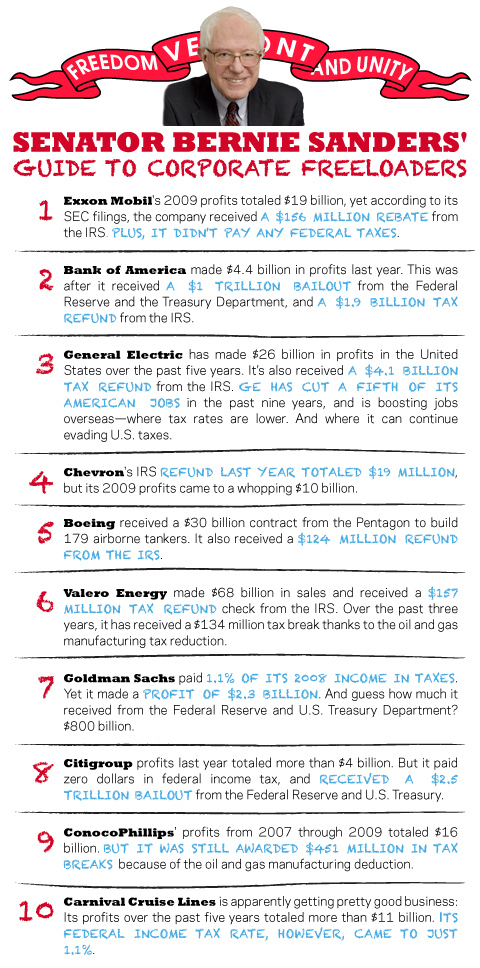
Of course, instead of directly helping the American people, the government threw trillions at the giant banks (including foreign banks; and see this) . The big banks have - in turn - used a lot of that money to speculate in commodities, including food and other items which are now driving up the price of consumer necessities. Instead of using the money to hire Americans, they're hiring abroad (and getting tax refunds from the government).
Ironically, the financial system is in worse shape than it was in 2008, according to Standard and Poors:
Additional fiscal risks we see for the U.S. include the potential for further extraordinary official assistance to large players in the U.S. financial or other sectors, along with outlays related to various federal credit programs. We estimate that it could cost the U.S. government as much as 3.5% of GDP to appropriately capitalize and relaunch Fannie Mae and Freddie Mac, two financial institutions now under federal control, in addition to the 1% of GDP already invested (see "U.S. Government Cost To Resolve And Relaunch Fannie Mae And Freddie Mac Could Approach $700 Billion," Nov. 4, 2010, RatingsDirect). The potential for losses on federal direct and guaranteed loans (such as student loans) is another material fiscal risk, in our view. Most importantly, we believe the risks from the U.S. financial sector are higher than we considered them to be before 2008 ....In other words, the government has thrown trillions at the big banks, but instead of using those funds to shore up their balance sheets and return to prudent banking practices, the big boys have used the money as new gambling chips for speculative commodities plays ... which are hosing the American consumer at the grocery store, Wal Mart and the pump.
Thursday, April 21, 2011
Leading Epidemiologist: Instead of Trying to Avoid Japanese Radiation, Put Your Energy Into Demanding a Saner Energy Policy
Steven Wing is a PhD epidemiologist, and an associate professor of epidemiology at the University of North Carolina at Chapel Hill. ("Epidemiology" means the study of disease on the population level).
Dr. Wing has spoken out against nuclear power, and has spoken out against the cancer risks from the Three Mile Island accident. He's not, by any definition, a nuclear industry shill.So I listened with interest to an interview of Wing by outspoken nuclear critic Arnie Gundersen about the health risks from the Fukushima fallout
Wing said:
- The generally accepted thinking is that there is no safe dose of radiation with regards to cancer or genetic mutation. There is a linear relationship between radiation dose and the likelihood of getting cancer. As the dose goes down, the risk goes down ... but it never disappears
- When the news media says there is no threat to health, that flies in the face of all of the standard models and all of the studies that have been done over a long period of time regarding radiation cancer
- When the radiation clouds move around the world, the radiation doses are spread out. But spreading out a given amount of radiation among among more people, it reduces each person's radiation risks, but it doesn't reduce the number of cancers which result from that amount of radiation. So having millions and millions of people exposed to a small dose could cause as much cancer as a hundred or a thousand people exposed to the same amount of radiation
- A lot of people are asking should they take iodine, should they avoid certain foods, should they move? No. There is almost nothing that Americans - or indeed, anyone outside of Japan - can do to reduce their exposure to Fukushima radiation. Wherever you go and whatever you do, you will be exposed to at least a small amount of radiation from Fukushima [Note: If you are not satisfied with his advice, see this. And a French non-profit group is giving different advice. Finally, Dr. Wing's advice might change if a higher level of radiation reached the U.S.]
- Fukushima will cause some cancers. But instead of trying to avoid radiation from Fukushima, we should put our energy into pressuring our elected representatives to implement a sane energy policy which won't lead to these types of fiascos in the future. We should get involved in collective action to put pressure on people in government and the energy industry to come up with a policy which minimizes harm. [For background, see this, this and this]
Note: For a much scarier take on the Fukushima fallout, see this short talk by physician Helen Caldicott.


 Posts
Posts